
How to Do Boxing Defense The Complete Guide
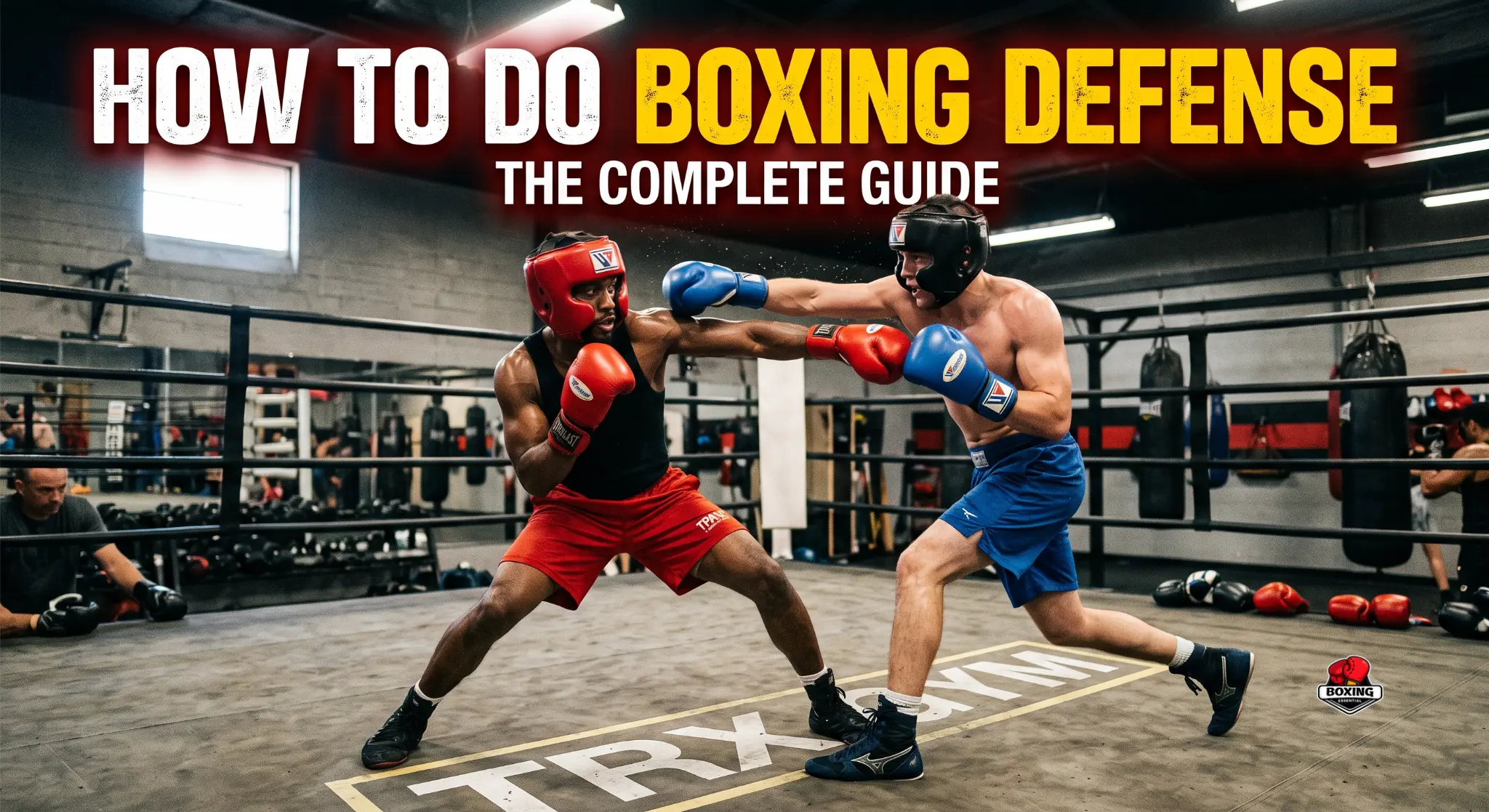
Many beginners dedicate too much time improving their striking ability, but only a tiny amount of time working on avoiding being hit. The result is a lack of confidence in sparring sessions, unnecessary injuries, and slow progress.
Good boxing defense doesn't consist of running away from an opponent and trying not to get hit. It involves proper control of distance, analyzing the opponent, good movement, and creating counterattacks.
In this complete guide, you will learn the fundamental concepts, techniques, drills, and strategies of boxing defense.
Key Takeaways
- A great defense in boxing involves positioning, timing, and anticipation.
- Learn how to perform the five basic defensive techniques properly: guard, footwork, head movement, blocking, and counters.
- Proper footwork stops more punches than quick hands can.
- A good defense provides openings for counters.
- Repetitive defensive drills will improve your reflexes, confidence, and ring intelligence.
- Knowing when to employ different defensive techniques is just as crucial as knowing how.
Why Defending in Boxing is Better than Attacking
A boxer who attacks all the time will become predictable. Every attack leaves you open to be countered.
Good defense enables you to:
- Reduce the amount of injury when training and competing.
- Feel calm under pressure.
- Save energy by not taking clean shots.
- Control the tempo of the fight.
- Gain good counter punching opportunities.
- Feel confident when sparring.
Have a long boxing career through reducing your body's injuries.
The best defending boxers not only evade but also make their opponents make mistakes.
The Five Foundations of Great Boxing Defense
Before learning advanced techniques, every boxer should master these five defensive pillars.
A Proper Boxing Stance
Everything begins with your stance.
A balanced stance allows you to move quickly in every direction while remaining ready to attack or defend.
A proper stance includes
- Feet shoulder width apart.
- Knees slightly bent.
- Weight distributed evenly between both feet.
- Chin tucked toward the chest.
- Hands protecting the jaw.
- Elbows close to the body.
- Eyes focused on your opponent's upper body.
Many beginners stand too tall or place too much weight on one foot, making them slow to react.
Pro Tip: Your stance should feel stable enough to absorb pressure yet mobile enough to move instantly.
Keep Your Hands in the Right Position
One of the most common beginner mistakes is dropping the hands after throwing punches.
A strong defensive guard should protect
- Chin
- Jaw
- Nose
- Temples
Your rear hand typically protects against straight punches, while the lead hand controls distance and blocks incoming jabs.
Remember
Punch. Return. Protect.
Every punch should end with your hands back in guard.
Learn Distance Management
Many people think defense starts after a punch is thrown.
Professional coaches know it starts long before.
Understanding distance means recognizing
- Safe range
- Punching range
- Counter range
- Escape range
If you're standing just outside your opponent's reach, they must overextend to land a punch. That creates excellent countering opportunities.
Distance management is often the biggest difference between beginners and experienced fighters.
Master Defensive Footwork
Footwork is your first line of defense.
Rather than relying on your gloves to absorb punches, your feet should help you avoid danger before punches land.
Good defensive footwork includes
- Small controlled steps
- Pivoting after combinations
- Maintaining balance
- Never crossing your feet
- Moving in angles instead of straight backward
Experienced boxers rarely retreat in a straight line because it allows aggressive opponents to continue attacking.
Instead, they pivot and create new angles.
Develop Defensive Awareness
Great defenders aren't faster because of extraordinary reflexes.
They're faster because they recognize patterns.
Pay attention to
- Shoulder movement
- Hip rotation
- Foot placement
- Rhythm changes
- Repeated combinations
The earlier you recognize a punch, the more options you have to defend against it.
How to Do Boxing Defense Using Essential Techniques
Once you've mastered the fundamentals, it's time to learn the core defensive techniques used in boxing.
High Guard
The high guard is the safest defensive position for beginners.
Raise both gloves near your temples while keeping your elbows close to your ribs.
Best against
- Hooks
- Straight punches
- Heavy combinations
Advantages
- Easy to learn
- Protects the head well
- Works during close exchanges
Disadvantages
- Can reduce visibility.
- Doesn't stop body shots completely.
- Uses more energy if held too tightly.
Blocking Punches
Blocking means absorbing punches with your gloves or forearms while maintaining position.
Use blocking against
- Hard crosses
- Hooks
- Fast combinations
Avoid blocking every punch.
Too much blocking allows opponents to control the fight.
Think of blocking as a temporary solution not your entire defense.
Slipping Punches
Slipping is one of the most effective defensive skills in boxing.
Instead of moving backward, you move your head slightly outside the punch's path.
Slip Left
Useful against
- Opponent's right cross
Slip Right
Useful against
- Opponent's jab
A successful slip keeps you close enough to counter immediately.
Small movements are best.
Large exaggerated slips often expose you to follow-up punches.
Rolling Under Hooks
Rolling, also called bobbing and weaving, is commonly used against hooks.
Instead of moving away from the punch, bend your knees and rotate underneath the punch while staying balanced.
Key points
- Bend with your legs, not your back.
- Keep your eyes on your opponent.
- Finish in position to counter.
This technique is frequently used by pressure fighters.
Parrying
Parrying redirects an incoming punch instead of absorbing it.
Use your lead hand to gently push a jab off its line.
Advantages include
- Saves energy
- Creates immediate counter opportunities
- Maintains offensive position
Parrying requires timing.
Trying to parry powerful punches without experience often leads to getting caught.
Catching the Jab
Instead of slapping every jab away, experienced boxers often "catch" it.
Simply receive the jab with your rear glove while keeping your guard compact.
This keeps your balance intact and prepares you for an immediate counter.
Shoulder Roll
The shoulder roll is famous because of Floyd Mayweather Jr.
It uses the lead shoulder to deflect straight punches while protecting the chin.
However, many beginners try to imitate it too early.
Without excellent timing, balance, and experience, the shoulder roll becomes risky.
Master the basics before attempting advanced defensive systems.
Choosing the Right Defense for Every Punch
Different punches require different defensive responses.
Opponent's Punch
Best Defensive Option
Jab
Slip, Catch, Parry
Cross
Block, Slip, Shoulder Roll
Left Hook
Roll, High Guard
Right Hook
Roll, High Guard
Uppercut
Step Back, Pivot
Body Hook
Elbow Block, Step Away
Understanding when to use each defense is what separates skilled boxers from beginners.
Common Boxing Defense Mistakes
Even talented beginners often make these mistakes
Leaning backward instead of moving your feet.
Closing your eyes during exchanges.
Dropping your hands after punching.
Crossing your feet while moving.
Standing directly in front of your opponent.
Overreacting to feints.
Blocking every punch instead of using movement.
Looking at the gloves instead of the chest and shoulders.
Forgetting to breathe while defending.
Panicking under pressure.
Recognizing these mistakes early will accelerate your defensive development and improve your performance in sparring and competition.
Advanced Boxing Defense Strategies
Once you've mastered the fundamentals, it's time to think like an experienced boxer. Elite fighters don't rely on a single defensive move; they combine techniques seamlessly while reading their opponent's intentions.
Combine Multiple Defensive Techniques
The best defense rarely involves just one movement.
For example
- Slip a jab → Throw a cross.
- Block a hook → Pivot out.
- Roll under a hook → Counter with a body shot.
- Parry a jab → Step in with a combination.
Combining defensive actions makes you unpredictable and creates more counterpunching opportunities.
Control the Center of the Ring
Good defense isn't just about avoiding punches it's also about controlling space.
By staying near the center of the ring, you have more room to move in every direction. Fighters trapped against the ropes have fewer escape options and often absorb more damage.
Practice circling, pivoting, and resetting your position instead of retreating in straight lines.
Use Angles Instead of Backpedaling
Many beginners instinctively move straight backward under pressure. Skilled opponents will continue advancing and eventually trap you.
Instead
- Pivot after combinations.
- Step to the outside of your opponent's lead foot.
- Exit at a 45 degree angle.
- Force your opponent to reset before attacking again.
Creating angles not only improves defense but also opens better opportunities for clean counters.
Learn to Read Your Opponent
Experienced fighters often recognize punches before they're thrown.
Watch for
- Shoulder movement
- Hip rotation
- Weight shifts
- Changes in breathing
- Repeated punch combinations
- Rhythm changes
Reading these subtle cues gives you extra time to react and choose the best defensive response.
Boxing Defense Drills to Improve Faster
Consistent practice is essential. The following drills build timing, balance, reaction speed, and defensive confidence.
Slip Rope Drill
Stretch a rope across your training space at shoulder height.
Move forward and backward while slipping beneath the rope after every step.
Benefits
- Improves head movement
- Builds defensive rhythm
- Develops proper posture
Mirror Shadowboxing
Shadowbox in front of a mirror while focusing entirely on defense.
Practice
- Slips
- Rolls
- Blocks
- Pivots
- Guard recovery
Watch your posture and hand position throughout the drill.
Double End Bag Training
The double end bag forces you to react to unpredictable movement.
It helps improve
- Reflexes
- Timing
- Distance control
- Counterpunch accuracy
This is one of the best tools for defensive development.
Tennis Ball Reaction Drill
Have a partner randomly throw tennis balls toward you.
Instead of catching them, practice slipping or moving your head away.
This simple exercise sharpens reaction time and visual tracking.
Defensive Shadowboxing
Spend an entire round without throwing punches.
Focus only on
- Footwork
- Guard
- Head movement
- Angles
- Defensive exits
Learning to move comfortably without attacking builds strong defensive habits.
Partner Defense Drill
Work with a training partner.
One person throws light jabs and crosses while the other practices
- Blocking
- Catching
- Slipping
- Rolling
- Pivoting
Start slowly before increasing speed.
Weekly Boxing Defense Training Plan
Day
Focus
Monday
Footwork + Guard
Tuesday
Slipping + Head Movement
Wednesday
Blocking + Parrying
Thursday
Defensive Sparring
Friday
Counterpunching
Saturday
Reaction Drills + Double-End Bag
Sunday
Active Recovery + Shadowboxing
Training defense several times each week leads to noticeable improvement.
Best Equipment for Boxing Defense Training
Using the right equipment helps you train more effectively.
Recommended gear includes
- Boxing gloves
- Mouthguard
- Headgear
- Double-end bag
- Heavy bag
- Slip rope
- Reflex ball
- Focus mitts
- Agility ladder
- Jump rope
Each tool develops different aspects of defensive performance, from reaction time to balance.
Defensive Styles Used by Professional Boxers
Every elite boxer has a unique defensive style.
High Guard
Used by fighters who prefer absorbing punches while staying in position to counter.
Best for
- Beginners
- Pressure fighters
Philly Shell
Made famous by Floyd Mayweather Jr.
Advantages
- Excellent against straight punches
- Strong counterpunching opportunities
Requires advanced timing and experience.
Peek a Boo
Popularized by Cus D'Amato and Mike Tyson.
Features
- Constant head movement
- Aggressive forward pressure
- Quick angles
- Explosive counters
Long Guard
Often used by taller boxers.
Benefits include
- Better distance control
- Easier jab defense
- Improved visibility
How Long Does It Take to Build Good Boxing Defense?
Progress depends on training consistency.
General timeline
- 1–2 weeks Improved guard awareness
- 1 month Better blocking and footwork
- 2–3 months Noticeable head movement
- 6 months Strong defensive habits during sparring
- 1+ year Advanced defensive instincts begin to develop
Regular coaching and quality sparring will accelerate progress.
Expert Tips for Better Boxing Defense
- Keep your chin tucked at all times.
- Relax your shoulders to react faster.
- Stay balanced after every punch.
- Never admire your own combinations.
- Return your hands to guard immediately.
- Focus on your opponent's chest rather than the gloves.
- Breathe steadily during exchanges.
- Practice defense every training session, not just offense.
- Learn from sparring instead of trying to "win" every round.
- Watch defensive specialists like Floyd Mayweather Jr., Pernell Whitaker, Willie Pep, Dmitry Bivol, and Canelo Alvarez to study timing and positioning.
Conclusion
Boxing skill doesn't only involve striking, but it requires you to know how to evade strikes by using your mind and your precision. Through mastering the basics, regular practice, and knowing when to use each defense strategy, you'll acquire the skills that will keep you safe inside the ring.
Looking for additional training tips? Check out our other boxing guides on boxing footwork, head movement exercises, counter punching tips, and the proper boxing gloves to wear.
Frequently Asked Questions
Q:What is the best boxing defense for beginners?
The high guard combined with proper footwork is the safest and most effective defensive system for beginners. As your skills improve, you can add slipping, rolling, and parrying.
Q:Should I block or slip punches?
It depends on the situation. Slipping avoids damage and creates counter opportunities, while blocking is often safer against fast combinations or powerful punches.
Q:Can I improve boxing defense without sparring?
Yes. Shadowboxing, slip rope drills, mirror work, and reaction exercises significantly improve defensive skills. However, controlled sparring is eventually necessary to apply those skills under pressure.
Q:Why do beginners get hit so often?
Most beginners focus on throwing punches while neglecting footwork, distance management, and head movement. Improving these fundamentals dramatically reduces the number of clean punches absorbed.
Q:How often should I practice boxing defense?
Include defensive drills in every training session. Even 15–20 minutes of focused defensive work several times a week can lead to substantial improvement.
Related Articles
 Boxing Training
Southpaw Stance Mistakes to Avoid 11 Common Errors
Most southpaws hear the same thing on day one: being left-handed is an advantage, opponents hate fighting you, enjoy the free lunch. Then they spend two years eating right hands and wondering where the free lunch went. The southpaw stance mistakes to avoid are rarely dramatic.
 Boxing Training
Boxing Defense Mistakes to Avoid Complete Guide
Good boxing defense is not simply about keeping your hands high or moving your head. Effective defense combines stance, balance, footwork, distance management, timing, anticipation, positioning, guard recovery, and intelligent movement.
 Boxing Training
Slipping Punches Tips for Better Boxing Defense
The fastest way to improve your defense is not to move your head as much as possible. It is to move it at the right time, by the right amount, while staying balanced enough to counter.