
Boxing Defense Mistakes to Avoid Complete Guide
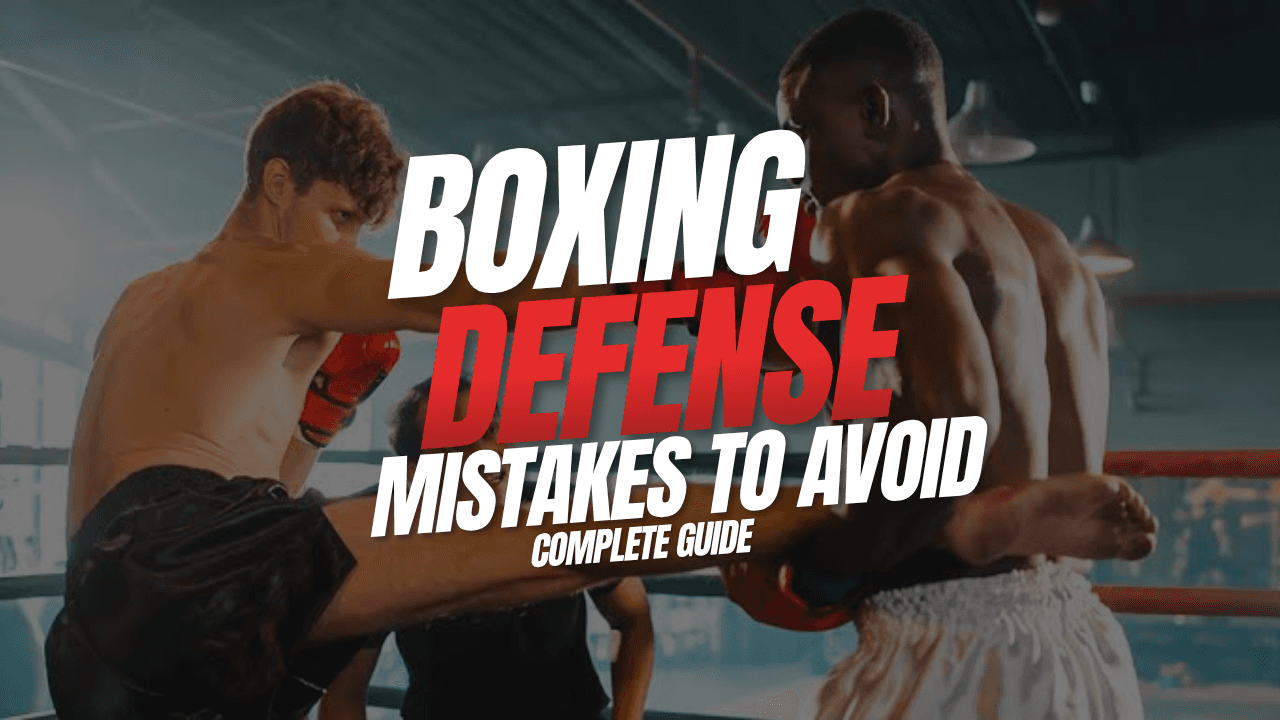
That is why understanding the boxing defense mistakes to avoid is just as important as learning slips, blocks, parries, rolls, pivots, and other defensive techniques.
A boxer can know several defensive moves and still get hit consistently if the fundamentals are weak. Dropping the hands after punching, crossing the feet, slipping too far, retreating in straight lines, closing the eyes, or reacting the same way every time can make a boxer easier to read.
The goal of defense is not to avoid every punch. That is unrealistic. The goal is to make clean punches difficult to land while keeping yourself balanced, composed, and ready to counter.
This guide covers 15 common boxing defense mistakes, explains why they happen, and provides practical ways for beginners, intermediate boxers, and advanced fighters to correct them.
Key Takeaways
- Build defense around balance, stance, footwork, and distance control.
- Keep your hands up and recover your guard after every punch.
- Use head movement with purpose instead of unnecessary movement.
- Avoid predictable reactions by combining slips, blocks, parries, pivots, and footwork.
- Practice defense through shadowboxing, partner drills, and controlled sparring.
- Making every defensive move helps you avoid punches, create counters, or escape safely.
What Makes Boxing Defense Effective?
Before examining common mistakes, it helps to understand what effective boxing defense is supposed to accomplish.
Good defense should help you:
- Reduce the number of clean punches you absorb.
- Maintain balance while moving.
- Protect vulnerable targets.
- Control the distance between you and your opponent.
- Recognize attacks before they fully develop.
- Create counterpunching opportunities.
- Escape dangerous positions.
- Manage energy throughout a round.
- Prevent your opponent from establishing predictable patterns.
Boxing defense includes much more than head movement. A complete defensive system can involve guard position, footwork, blocking, parrying, slipping, rolling, pivots, distance management, clinching where permitted, and counterpunching.
The important point is that these techniques should work together.
For example, a boxer might use a high guard to absorb pressure, take a small step backward to create distance, parry the next jab, and then counter with a straight punch. Defense becomes much more effective when each movement has a purpose.
Dropping Your Hands After Punching
One of the most common boxing defense mistakes is failing to recover the hands after throwing punches.
A boxer may throw a jab-cross-hook combination and leave his hands low while watching the result. This creates an opening for an immediate counter.
For example, after the cross, the rear hand may remain away from the face while the lead hand drops. An opponent can exploit that opening with a hook or straight counter.
How to fix it
Build a consistent recovery habit:
Punch → return → defend → move
During shadowboxing, deliberately return every punch to a functional defensive position. Start slowly and focus on technique before increasing speed.
Your defensive responsibility does not disappear when you attack.
Standing Too Tall and Losing Your Base
A tall, rigid posture can make defensive movement slower and reduce your ability to react.
This does not mean every boxer should fight in an exaggerated crouch. Stance depends on body type, style, reach, tactics, and comfort.
The real problem is becoming stiff.
A functional boxing stance should allow you to:
- Move laterally.
- Step forward and backward.
- Pivot.
- Slip.
- Roll.
- Punch without losing balance.
- Recover quickly after an exchange.
Keep enough flexibility in your knees and hips to move naturally rather than locking the legs.
A good defensive stance should make movement easier, not restrict it.
Crossing Your Feet While Moving
Crossing your feet can temporarily destroy your balance and limit your defensive options.
This becomes especially dangerous when moving sideways under pressure. If your feet cross, changing direction or responding to a punch can become slower.
Simple correction drill
Move around the ring using short, controlled steps:
Step → reset your base → step → reset
Do not focus on speed at first.
Focus on keeping your feet underneath you.
Once the movement becomes automatic, gradually increase the pace.
Good defensive footwork is not about taking huge steps. It is about maintaining a stable base while changing position.
Relying Only on a High Guard
A high guard is useful, but it is not a complete defensive strategy.
Keeping both gloves near your head can protect important targets, but standing still behind a high guard allows your opponent to control distance, volume, and positioning.
A complete defensive system can combine the high guard with:
- Footwork
- Parrying
- Blocking
- Slipping
- Rolling
- Angles
- Counterpunching
- Distance management
Your guard should help you survive an exchange or create an opportunity to respond.
It should not become a reason to stop moving.
Moving Your Head Without a Purpose
Head movement can look impressive, but excessive movement can become a defensive weakness.
Some boxers constantly bob, weave, and slip even when no punch is coming. This can waste energy and create predictable rhythms.
Effective head movement responds to a specific situation.
For example:
Opponent throws a jab → compact slip → angle → counter
That is different from moving the head continuously without reading the opponent.
A simple rule
Move your head because you have a reason.
Defensive movement should solve a problem, create an angle, or prepare your next action.
Slipping Too Far
A slip does not require you to dramatically move your entire upper body.
The purpose of a slip is to move your head away from the punch while maintaining balance and positioning.
Over-slipping can create several problems:
- You lose balance.
- Your feet become disconnected from your upper body.
- You move outside your ideal countering position.
- You become vulnerable to follow-up punches.
- Recovery takes longer.
A compact slip is usually easier to recover from than a dramatic movement.
Keep your feet underneath you and avoid turning every defensive reaction into a large motion.
Slipping Into Another Punch
Avoiding one punch does not mean the exchange is finished.
Consider a simple combination:
Jab → cross
If you slip the jab directly into the path of the cross, you have avoided the first punch but created a problem for yourself.
This is why defensive awareness must include what happens next.
Instead of asking only:
How do I avoid this punch?
Ask:
Where is my opponent likely to attack next?
This requires learning to recognize combinations, habits, rhythm, and positioning.
Defense is not only a reaction. It is anticipation.
Retreating in a Straight Line
Moving backward can be an effective defensive tool, but repeatedly retreating straight toward the ropes can put you in a dangerous position.
Eventually, you run out of space.
Once you are near the ropes, your opponent has fewer directions to worry about. This can make it easier for them to maintain pressure.
Instead, learn to combine backward movement with:
- Lateral steps
- Pivots
- Angles
- Controlled counters
- Clinch awareness where appropriate
A defensive retreat should ideally improve your position rather than simply postpone the next exchange.
Watching Only the Opponent's Gloves
Beginners often stare at an opponent's gloves because they are trying to see the punches coming.
The problem is that punches are often preceded by movement elsewhere in the body.
Pay attention to:
- Shoulder rotation
- Hip movement
- Weight transfer
- Foot position
- Changes in distance
- Rhythm
- Body positioning
- Feints
The goal is not to stare at one specific body part.
Instead, learn to observe the opponent as a whole.
Reading movement before the punch is fully launched can give you more time to react.
Closing Your Eyes When Punches Come
Closing your eyes during an attack is a common defensive reaction, particularly among inexperienced boxers.
It is understandable. A punch coming toward the face triggers a natural protective response.
But closing your eyes removes valuable information.
If you cannot see the opponent:
- You may miss the next punch.
- You cannot read combinations effectively.
- You may lose track of distance.
- You become more likely to panic.
- Your counter opportunities disappear.
How to improve it
Start with controlled partner drills.
Have your partner throw light, predictable punches while you focus on staying relaxed and keeping your eyes open.
The objective is not to prove that you can take punches.
The objective is to become comfortable seeing them.
Using the Same Defensive Reaction Every Time
Predictability is dangerous in boxing.
If you always slip outside the jab, an experienced opponent may begin anticipating that movement.
If you always retreat after combinations, your opponent can gradually cut off the ring.
If you always block hooks, they may begin attacking the body.
Effective defense requires variation.
Depending on the situation, you might:
- Parry.
- Slip.
- Block.
- Step away.
- Pivot.
- Change angle.
- Counter.
- Clinch where permitted.
You do not need to use every technique constantly.
The goal is to avoid becoming easy to read.
Forgetting to Defend After Combinations
A combination is not finished when the last punch lands.
One of the most important defensive habits is learning what to do immediately after attacking.
For example:
Jab → cross → hook
If you finish the hook and remain directly in front of your opponent, you may give them an easy counter opportunity.
Instead, build an exit into your combinations.
Examples:
- Jab → cross → pivot
- Jab → cross → roll → hook
- Jab → hook → step out
- Body shot → head shot → angle out
This creates the habit of finishing an attack with defensive responsibility.
Ignoring Distance Management
Distance is one of the most powerful forms of defense.
A punch cannot land cleanly if you are outside its effective range.
Understanding distance allows you to recognize different defensive situations.
Long range
Straight punches and jabs are often important.
Mid-range
Both boxers may be able to reach each other with combinations, making timing and positioning especially important.
Close range
Hooks, uppercuts, short punches, body attacks, and clinch situations become more relevant.
Your defensive response should change according to range.
A boxer who understands distance does not have to rely exclusively on reaction speed.
Trying Advanced Defensive Techniques Too Early
The shoulder roll, advanced slips, complex pivots, and sophisticated counter defenses can be useful tools.
But advanced techniques cannot compensate for poor fundamentals.
If your stance is unstable, your footwork is inconsistent, and your hands do not recover properly, adding complicated defensive movements can create more problems.
Build your foundation around:
- Stance
- Balance
- Guard
- Footwork
- Distance
- Basic blocks and parries
- Controlled head movement
- Defensive recovery
- Counterpunching
Once these skills become reliable, advanced techniques can be introduced progressively.
The fundamentals remain important regardless of experience level.
Practicing Defense Only in Shadowboxing
Shadowboxing is an excellent way to develop movement, positioning, visualization, and technique.
However, it cannot reproduce every variable created by a live opponent.
A real opponent can change:
- Distance
- Timing
- Rhythm
- Punch selection
- Pressure
- Angles
- Feints
- Combinations
That is why defensive training should gradually introduce more realistic situations.
A useful progression can be:
Shadowboxing → partner drills → pad work → technical sparring → controlled live sparring
The exact progression should depend on the boxer's experience, coaching environment, physical readiness, and safety considerations.
The purpose is to transfer defensive movements from predictable practice into increasingly realistic situations.
How to Fix Boxing Defense Mistakes Faster
Knowing your weaknesses is only the beginning.
The key is to correct them systematically.
Identify One Problem
Do not try to fix ten defensive mistakes in one session.
Choose one.
For example:
“I drop my rear hand after the cross.”
Make that the focus of your training.
Isolate the Movement
Practice the correction slowly.
Throw the cross and immediately return the rear hand to its defensive position.
Repeat until the movement becomes more consistent.
Add Footwork
Once the movement is comfortable, add movement.
For example:
Cross → recover → pivot
This teaches you to defend while changing position.
Add a Controlled Partner Drill
A partner or coach can introduce a predictable stimulus.
The goal is to practice responding correctly without immediately creating unnecessary intensity.
Test the Skill Under Pressure
Once the movement becomes reliable, introduce greater unpredictability through controlled technical work.
Review Your Performance
Video review can reveal mistakes that are difficult to notice while boxing.
Look for:
- Dropped hands
- Crossed feet
- Standing square
- Poor exits
- Predictable slips
- Closing your eyes
- Overreacting to feints
- Getting trapped near the ropes
- Losing balance after punches
The objective is to turn observation into a specific training adjustment.
A Simple Boxing Defense Drill Routine
A short defensive routine can target several fundamental problems without making training unnecessarily complicated.
Drill 1: Guard Recovery
Throw single punches and immediately return to a functional defensive position.
3 rounds × 2 minutes
Focus on automatic recovery rather than maximum punching speed.
Drill 2: Slip and Counter
Use controlled jabs from a partner or coach.
Respond with a compact slip followed by a controlled counter.
3 rounds × 2 minutes
Focus on balance and positioning.
Drill 3: Defensive Footwork
Move forward, backward, and laterally while maintaining your stance.
Focus on keeping the feet coordinated and avoiding unnecessary crossing.
3 rounds × 2 minutes
Drill 4: Combination and Exit
Practice combinations followed by a pivot, angle, or controlled retreat.
3 rounds × 2 minutes
The objective is to make defensive responsibility part of every combination.
Drill 5: Technical Defense Sparring
Use controlled sparring with one specific objective.
For example:
“After every combination, I will create an exit.”
This makes the session measurable instead of simply trying to “box better.”
Beginner vs. Intermediate vs. Advanced Defensive Mistakes
Different experience levels usually require different priorities.
Beginners
Focus on:
- Dropping the hands
- Poor stance
- Crossing the feet
- Standing too tall
- Closing the eyes
- Watching only the gloves
- Forgetting to recover after punching
- Overusing head movement
Intermediate Boxers
Focus on:
- Predictability
- Distance management
- Defensive exits
- Slipping into combinations
- Poor counter positioning
- Getting trapped against the ropes
- Overreacting to feints
- Failing to recognize patterns
Advanced Boxers
Focus on:
- Reading tendencies
- Manipulating rhythm
- Creating defensive traps
- Controlling distance
- Changing defensive responses
- Drawing predictable attacks
- Combining defense and counters
- Managing energy over multiple rounds
This progression matters because a technique that works in one situation can become a liability when used mechanically.
How to Know If Your Boxing Defense Is Improving
Do not measure defensive improvement only by counting how many punches you avoid.
Look for broader improvements.
You may be progressing if:
- You remain balanced after exchanges.
- Your hands recover automatically.
- You stay calmer under pressure.
- You recognize punches earlier.
- You waste less energy on unnecessary movement.
- You can defend without completely abandoning your offensive position.
- You escape the ropes more efficiently.
- Your defensive reactions become less predictable.
- You understand why you were hit.
- You recover more quickly after mistakes.
The last point is particularly important.
Getting hit is part of boxing.
Repeating the same mistake without understanding why it happened is the bigger problem.
Conclusion
The biggest boxing defense mistakes to avoid usually come down to fundamentals: poor balance, weak footwork, dropped hands, poor distance management, predictable reactions, and failing to defend after attacking.
You do not need dozens of defensive techniques to become harder to hit. Instead, develop a smaller group of reliable defensive habits and learn when each one is appropriate.
Keep your stance balanced. Recover your hands after every punch. Move with purpose. Watch your opponent's overall movement instead of focusing only on the gloves. Avoid unnecessary head movement and make your defensive reactions difficult to predict.
Most importantly, make every defensive movement serve a purpose.
It should help you avoid the punch, improve your position, create a counter opportunity, or safely leave the exchange.
Frequently Asked Questions
Q:What are the most common boxing defense mistakes to avoid?
Common mistakes include dropping the hands, crossing the feet, standing too tall, relying only on a high guard, closing the eyes, overusing head movement, slipping too far, retreating in straight lines, ignoring distance, and becoming predictable.
Q:Why do I keep getting hit in boxing?
You may be getting hit because of poor distance management, slow hand recovery, weak footwork, predictable defensive reactions, poor positioning, closing your eyes, or failing to recognize attacks early.
Q:Is keeping your hands up enough for good boxing defense?
No. A high guard is useful, but effective defense also involves stance, footwork, distance control, timing, positioning, blocking, parrying, head movement, and appropriate countering.
Q:How can I improve my boxing defense?
Focus on one defensive weakness at a time. Practice it through shadowboxing, partner drills, controlled pad work, technical drills, and appropriately supervised sparring. Video review can also help identify recurring habits.
Q:Should beginners learn advanced boxing defense?
Beginners can understand advanced concepts, but they should build them on strong fundamentals. Balance, stance, footwork, guard recovery, distance management, and basic defensive movements should come first.
Related Articles
 Boxing Training
Southpaw Stance Mistakes to Avoid 11 Common Errors
Most southpaws hear the same thing on day one: being left-handed is an advantage, opponents hate fighting you, enjoy the free lunch. Then they spend two years eating right hands and wondering where the free lunch went. The southpaw stance mistakes to avoid are rarely dramatic.
 Boxing Training
Slipping Punches Tips for Better Boxing Defense
The fastest way to improve your defense is not to move your head as much as possible. It is to move it at the right time, by the right amount, while staying balanced enough to counter.
 Boxing Training
Best Boxing Footwork Tips to Improve Your Boxing Skills
While powerful punches often steal the spotlight, they're only effective if your feet put you in the right position. Even the hardest punch loses its impact when your stance is unstable or your balance is off. Great footwork allows you to attack without overcommitting, defend without panicking, and control the pace of every exchange.