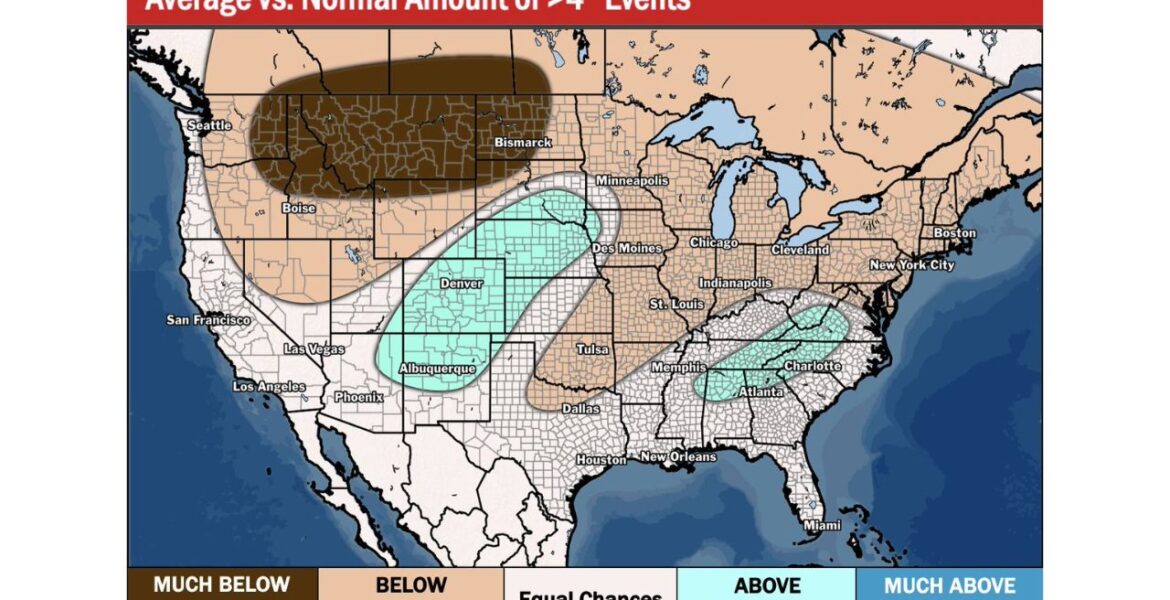
DENVER, Colorado — A new winter outlook is giving an early look at where major snowstorms could be more or less common this season. The outlook compares the expected number of snow events of 4 inches or more from November through March to what is normal. Denver, Albuquerque and Atlanta sit in areas that could see more of these storms, while Chicago, New York City and much of the northern part of the country could see fewer.
Key Numbers at a Glance
| Outlook Category | Areas Included |
|---|---|
| Above normal | Denver, Albuquerque, the central Plains, Memphis to Atlanta and Charlotte |
| Below normal | Seattle, Boise, Minneapolis, Chicago, St. Louis, Cleveland, New York City, Boston, Tulsa, Dallas |
| Much below normal | Northern Rockies and northern High Plains, including much of Montana |
| Equal chances | California, the Desert Southwest, the Gulf Coast and Florida |
| Snow event size | 4 inches or more |
| Season covered | November through March |
Where It Is Hitting
The outlook splits the country into clear zones:
- Denver and Albuquerque sit inside a band of above normal major snow events stretching northeast through the central Plains toward Nebraska and Iowa.
- Memphis, Atlanta and Charlotte fall inside a second above normal zone across Tennessee, northern Alabama, Georgia and the Carolinas.
- Chicago, Indianapolis, Cleveland, New York City and Boston sit in the below normal area across the Great Lakes and Northeast.
- Seattle and Boise also lean below normal in the Northwest.
- Montana and parts of Wyoming, Idaho and the western Dakotas fall in the much below normal zone, with Bismarck near its eastern edge.
- Tulsa and Dallas sit in a smaller below normal strip in the southern Plains.
- San Francisco, Los Angeles, Las Vegas, Phoenix, Houston, New Orleans and Miami show equal chances.
When to Expect It
This outlook covers the full winter season:
- November and December: Early season storms begin, especially in the Rockies and Plains.
- January and February: The peak of winter, when major snowstorms are most common for much of the country.
- March: Late season storms are still possible, especially in the central Plains and mountains.
Why This Is Happening
Winter storm tracks shift from year to year based on large patterns in the atmosphere and oceans. This season, storms are expected to favor a path through the southern Rockies and central Plains, then across the South. That would put Denver, Albuquerque and the Tennessee Valley in line for more frequent heavy snow.
At the same time, the northern tier of the country may sit on the drier side of the main storm track. That could mean fewer big snowstorms for the Great Lakes, Northeast and northern Rockies.
What This Means for You
It is important to know what “above normal” really means. In Atlanta or Charlotte, where 4 inch snowstorms are rare, even one or two extra storms would be above normal. In Denver, it could mean several more big snow days than usual.
“Below normal” does not mean no snow. Chicago and New York City will still likely see snow this winter, just possibly fewer big storms than usual. A single major storm can still bring serious impacts.
How to Stay Safe
- Prepare early with shovels, ice melt and winter car kits, no matter which zone you are in.
- Stock up in the South, where stores can run out of supplies quickly before rare snowstorms.
- Check your home heating before the coldest months arrive.
- Plan for travel delays in Denver, Atlanta and other above normal areas.
- Follow short-term forecasts, since seasonal outlooks cannot predict individual storms.
Boxingessential.com will continue tracking the winter snow outlook across Colorado, New Mexico, Georgia, Illinois and New York, including Denver, Albuquerque, Atlanta, Chicago and New York City, and will provide updates as major snowstorms and winter patterns develop this season.
You may also like
Leave a Reply